
Anúncios
Every business, no matter how profitable on paper, runs into moments where cash on hand doesn’t quite match cash flow needs. Payroll is due before customer payments arrive. Inventory needs to be purchased ahead of the busy season. Rent, utilities, and supplier bills don’t pause just because revenue is temporarily tight. This everyday financial juggling act is where working capital loans come in — a financing tool designed not for long-term expansion or asset purchases, but for keeping the daily engine of a business running smoothly.
This guide takes a deep dive into what working capital loans are, how they work, the different types available, their pros and cons, and how businesses can determine whether this type of financing is the right fit for their needs.
Anúncios
What Is a Working Capital Loan?
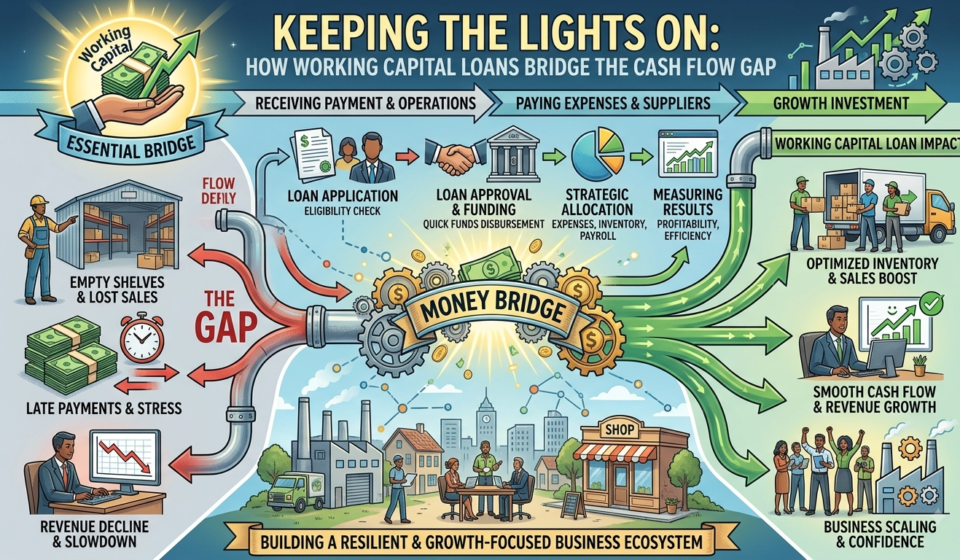
A working capital loan is a type of financing used to cover a business’s short-term operational needs rather than long-term investments like real estate or equipment. It is meant to bridge the gap between money going out (expenses) and money coming in (revenue), ensuring that day-to-day operations continue without interruption.
Working capital itself refers to the difference between a company’s current assets (cash, inventory, receivables) and current liabilities (bills, short-term debts, payroll obligations). When that gap becomes too tight — or negative — a business may struggle to pay for essential expenses even if it’s fundamentally profitable. A working capital loan provides the liquidity needed to smooth over these short-term gaps.
Anúncios
Unlike loans meant for large capital expenditures, working capital loans are typically used for:
- Payroll and employee wages
- Rent and utility payments
- Purchasing inventory or raw materials
- Covering seasonal slowdowns
- Managing unexpected expenses
- Bridging gaps between invoicing and payment collection
Why Businesses Need Working Capital Loans
Even well-established, profitable businesses can experience cash flow crunches. This is especially true for companies that:
- Operate seasonally, such as retailers who need to stock up before holiday sales or landscaping companies that see reduced revenue in winter months.
- Have long payment cycles, where customers pay invoices 30, 60, or 90 days after service delivery.
- Are experiencing rapid growth, which often requires more inventory, staff, or marketing spend before the revenue from that growth materializes.
- Face unexpected expenses, such as equipment repairs, emergency inventory replenishment, or sudden drops in sales.
In these situations, a working capital loan can provide the cushion needed to keep operations running smoothly without disrupting service quality, employee satisfaction, or vendor relationships.
How Working Capital Loans Work
The general process for obtaining and using a working capital loan typically follows these steps:
- Assess the Need: A business identifies a short-term cash flow gap, whether due to seasonality, growth, or unexpected expenses.
- Choose a Loan Type: Businesses select from various working capital financing options based on their needs, creditworthiness, and repayment preferences.
- Apply for Financing: The business submits an application, typically including financial statements, bank statements, tax returns, and sometimes accounts receivable details.
- Receive Funds: Once approved, funds are disbursed — often quickly, especially with online lenders — and can be used flexibly to cover operational costs.
- Repay the Loan: Repayment terms vary widely, ranging from daily or weekly automatic deductions to monthly installments, depending on the loan type and lender.
Because working capital loans are generally short-term in nature, repayment periods are often shorter than traditional term loans — ranging from a few months to a couple of years.
Types of Working Capital Loans
There isn’t a single standard “working capital loan” product — rather, it’s a category that includes several different financing structures, each suited to different business situations.
1. Short-Term Business Loans
These are lump-sum loans repaid over a relatively short period, often six months to two years. They are straightforward, with fixed repayment schedules and predictable costs.
2. Business Lines of Credit
A line of credit provides access to a set amount of funds that a business can draw from as needed, only paying interest on the amount actually used. This flexibility makes it a popular choice for managing fluctuating cash flow needs.
3. Invoice Financing
As covered in other financing discussions, invoice financing allows businesses to borrow against unpaid invoices, unlocking cash that is already owed to them rather than waiting for customer payments.
4. Merchant Cash Advances
This option provides a lump sum in exchange for a percentage of future credit card sales or daily revenue. While convenient for businesses with strong daily sales volume, this option often comes with higher costs compared to traditional loans.
5. SBA Working Capital Loans
In some countries, government-backed loan programs, such as those offered through the Small Business Administration in the United States, provide working capital financing with favorable terms, though the application process can be more rigorous.
6. Trade Credit and Vendor Financing
Some businesses negotiate extended payment terms directly with suppliers, effectively creating a working capital solution without involving a traditional lender.
7. Equipment or Inventory Financing
While technically tied to specific assets, this type of financing can free up other cash reserves for operational needs by covering the cost of inventory or equipment separately.
Secured vs. Unsecured Working Capital Loans
Working capital loans can be either secured or unsecured:
- Secured loans require collateral, such as business assets, inventory, or receivables, which can reduce the interest rate but puts those assets at risk if the loan isn’t repaid.
- Unsecured loans don’t require collateral but often come with higher interest rates and may require a personal guarantee from the business owner, especially for newer or smaller businesses.
The choice between secured and unsecured financing often depends on the business’s credit profile, the lender’s requirements, and how much risk the business owner is willing to take on.
Benefits of Working Capital Loans
Maintains Smooth Operations
The most immediate benefit is ensuring that day-to-day expenses are covered, preventing disruptions to payroll, supplier payments, or service delivery.
Flexible Use of Funds
Unlike loans tied to specific purchases (like equipment financing), working capital loans can typically be used for a wide range of operational expenses.
Fast Access to Capital
Many online lenders offer expedited approval and funding processes, sometimes providing funds within a day or two, which is crucial when facing urgent cash flow gaps.
Helps Manage Seasonal Fluctuations
Businesses with predictable seasonal cycles can use working capital loans strategically to prepare for busy seasons or bridge slow periods.
Builds Business Credit
Responsibly managing and repaying a working capital loan can help build a positive business credit history, which can support access to better financing terms in the future.
No Equity Dilution
Unlike raising capital through investors, working capital loans allow business owners to maintain full ownership and control of their company.
Potential Drawbacks of Working Capital Loans
Shorter Repayment Terms
Because these loans are designed for short-term needs, repayment periods are often compressed, which can mean higher periodic payments compared to long-term loans.
Higher Interest Rates for Certain Products
Options like merchant cash advances or unsecured short-term loans can carry higher costs compared to traditional long-term financing.
Risk of Debt Cycles
If used to cover recurring cash flow shortfalls rather than addressing underlying business issues, working capital loans can create a cycle of dependency on borrowed funds.
Collateral Risk
For secured loans, failing to repay could result in the loss of pledged assets, such as receivables, inventory, or equipment.
Frequent Repayment Schedules
Some working capital loan products require daily or weekly repayments, which can strain cash flow further if not carefully managed.
How to Determine if a Working Capital Loan Is Right for Your Business
Before pursuing a working capital loan, business owners should consider the following:
- Is the cash flow gap temporary or a sign of a deeper issue? If the business consistently struggles to cover operating expenses, addressing root causes — such as pricing, cost structure, or receivables management — may be more important than repeatedly borrowing.
- What is the loan being used for? Working capital loans are best suited for short-term, operational needs rather than long-term investments like purchasing real estate or major equipment upgrades.
- Can the business comfortably manage repayment terms? Reviewing cash flow projections against proposed repayment schedules helps avoid taking on debt that could strain finances further.
- What are the total costs involved? Beyond interest rates, businesses should evaluate origination fees, processing fees, and any prepayment penalties associated with the loan.
Steps to Apply for a Working Capital Loan
- Evaluate Cash Flow Needs: Determine exactly how much capital is needed and for what specific purpose.
- Review Business Financials: Gather financial statements, tax returns, and bank statements, as lenders typically require these to assess eligibility.
- Research Loan Options: Compare different types of working capital financing, interest rates, and repayment terms across multiple lenders.
- Check Eligibility Requirements: Requirements vary by lender but often include minimum time in business, minimum annual revenue, and credit score thresholds.
- Submit an Application: Complete the lender’s application process, providing all required documentation.
- Review Loan Terms Carefully: Before accepting funds, thoroughly review interest rates, fees, repayment schedules, and any collateral requirements.
- Receive and Manage Funds: Once approved, use the funds strategically for their intended purpose, and monitor cash flow to ensure smooth repayment.
Tips for Managing a Working Capital Loan Responsibly
- Use funds strictly for intended operational needs rather than long-term investments that may require a different type of financing.
- Monitor cash flow closely to ensure repayment obligations don’t create additional financial strain.
- Avoid stacking multiple short-term loans simultaneously, as this can quickly lead to unsustainable repayment burdens.
- Communicate with lenders proactively if cash flow challenges arise, as many lenders offer restructuring options rather than risking default.
- Reassess business financial health regularly to determine whether recurring working capital needs point to a larger structural issue that needs addressing.
Frequently Asked Questions (FAQs)
1. What is the difference between a working capital loan and a traditional business loan? Working capital loans are generally short-term and designed to cover day-to-day operational expenses, while traditional business loans are often used for larger, long-term investments such as equipment, real estate, or business expansion.
2. How quickly can a business receive funds from a working capital loan? Depending on the lender and loan type, funds can be disbursed anywhere from within 24 hours (common with online lenders) to a few weeks (more typical with traditional banks or government-backed loans).
3. Do working capital loans require collateral? It depends on the type of loan. Secured working capital loans require collateral such as receivables, inventory, or other business assets, while unsecured loans do not, though they may come with higher interest rates.
4. What credit score is needed to qualify for a working capital loan? Requirements vary by lender, but many online lenders offer more flexible credit requirements compared to traditional banks, which typically look for stronger credit profiles.
5. Can startups qualify for working capital loans? It can be more challenging for startups without an established financial history, but some lenders offer working capital financing options tailored to newer businesses, sometimes with higher rates or stricter terms.
6. What is the typical repayment period for a working capital loan? Repayment periods generally range from a few months up to two years, though this varies significantly depending on the loan type and lender.
7. Are working capital loans only for businesses facing financial trouble? Not necessarily. Many financially healthy businesses use working capital loans strategically to manage seasonal fluctuations, seize growth opportunities, or maintain smooth operations during temporary cash flow gaps.
8. What happens if a business can’t repay a working capital loan on time? Consequences vary depending on the lender and loan terms, but may include additional fees, damage to business credit, or, in the case of secured loans, potential loss of pledged collateral. Many lenders offer restructuring options if communicated with proactively.
9. Is a business line of credit considered a type of working capital loan? Yes. A business line of credit is one of the most flexible forms of working capital financing, allowing businesses to draw funds as needed and only pay interest on the amount used.
10. How do I know how much working capital financing my business needs? This typically involves reviewing cash flow statements, identifying upcoming expenses, and calculating the gap between expected income and outgoing obligations over a specific period, often with the help of an accountant or financial advisor.
Conclusion
Working capital loans serve as a critical financial tool for businesses navigating the natural ebb and flow of operational expenses and revenue timing. Whether covering payroll during a slow season, purchasing inventory ahead of peak demand, or managing unexpected costs, this type of financing helps ensure that short-term cash flow gaps don’t disrupt the broader health and stability of a business.
However, like any financial tool, working capital loans should be used strategically and responsibly. Business owners should carefully evaluate their specific needs, compare available loan options, and ensure repayment terms align with realistic cash flow projections. When used thoughtfully, working capital loans can provide the flexibility and breathing room businesses need to navigate short-term challenges while staying focused on long-term growth and success.